
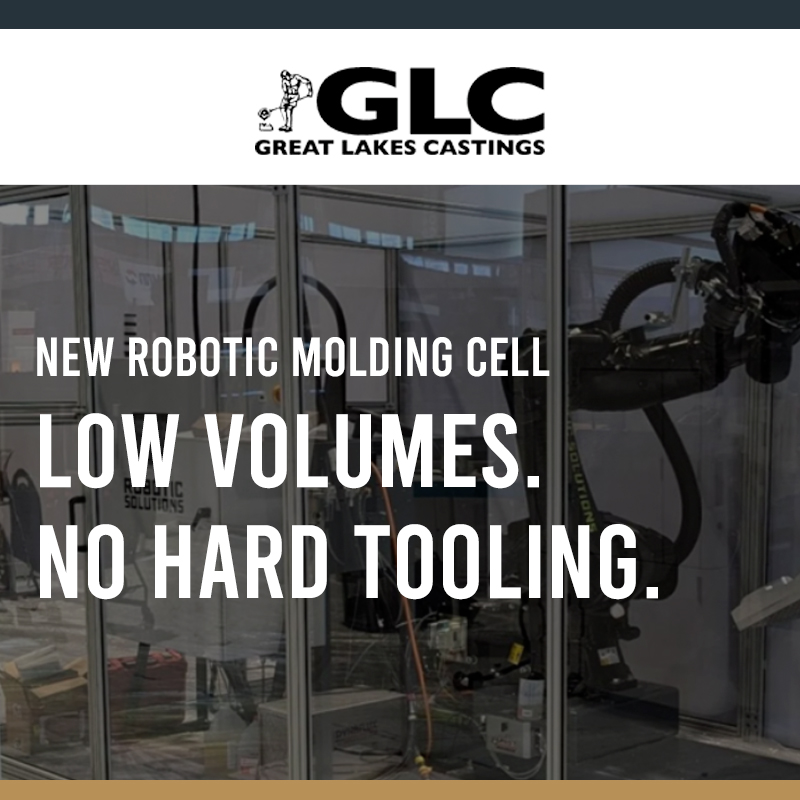
Introducing GLC's New Robotic Molding Cell
For prototypes and low-volume castings, traditional tooling can add costs and lead times that are difficult to justify. Great Lakes Castings’ new Robotic Molding Cell (RMC) offers another approach, using a six-axis robotic arm and rotating table to mill sand molds directly from approved 3D CAD designs.
What This New Capability Means for Your Project
- Consistency Through Automation: The robotic arm mills cope and drag molds directly from the 3D CAD design, supporting precise, consistent mold production through an automated process.
- Greater Efficiency for Short Runs: By removing the need to build hard tooling for suitable projects, RMC avoids a costly upfront step. GLC targets 4–8 weeks from CAD file approval to finished casting.
- Expanded Low-Volume Capabilities: The cell adds a manufacturing option for prototypes, one-off castings, bridge production, and legacy replacement parts that might not justify traditional tooling. There is no minimum order quantity.
- Flexibility to Refine Designs: Changes can be made to the CAD model without rebuilding physical patterns, making engineering iterations and design validation more practical.
- Versatile Casting Capabilities: Using chemically bonded no-bake sand molds, RMC supports gray and ductile iron castings up to 275 lbs.
Backed by 80 years of foundry experience, GLC continues to invest in technology that complements its established molding operations and expands manufacturing options for customers.
Have a prototype, replacement part, or low-volume project in mind? Tell us what you need, and our team can review the requirements to determine whether robotic molding is a fit.